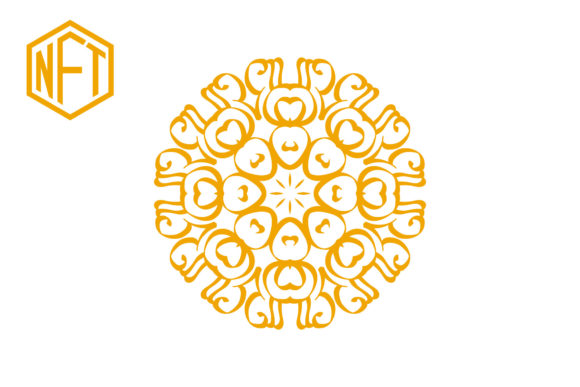
Mandala Chinese Vector NFT: A Practical Evaluation for Designers and Collectors
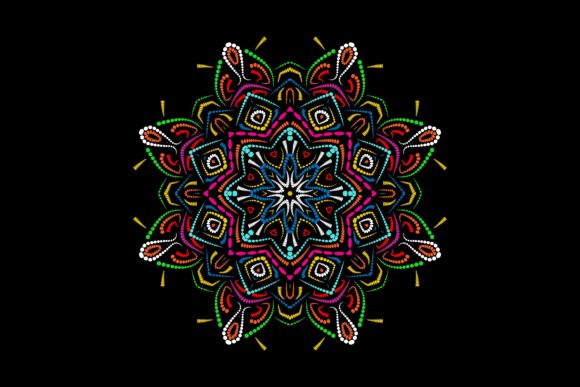
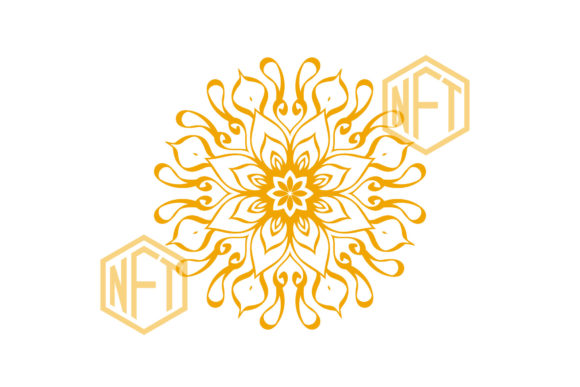
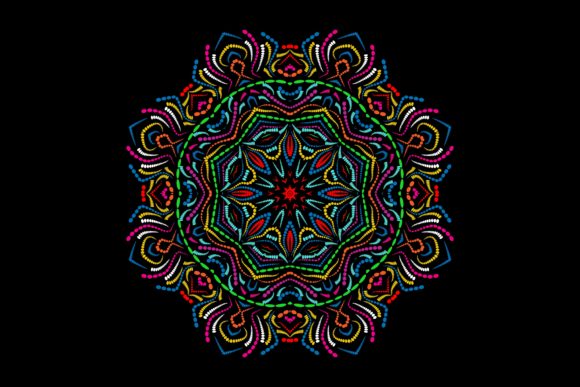
A Mandala Chinese Vector NFT refers to a digitally native, blockchain-verified artwork that combines traditional mandala symmetry with Chinese aesthetic motifs—such as cloud patterns, auspicious symbols (e.g., the double happiness character or peony blossoms), and ink-wash-inspired linework—all delivered as scalable vector files. Unlike static JPEGs or raster-based NFTs, this asset is distributed as editable vector formats, enabling precise adaptation across print, web, and physical fabrication contexts.
This particular offering includes six digital files—AI, EPS, SVG, DXF, JPG, and PNG—each rendered on a 1920px × 1280px canvas. The inclusion of both vector (AI, EPS, SVG, DXF) and raster (JPG, PNG) formats supports diverse technical workflows, from laser cutting and embroidery digitizing to web display and social media sharing.
Why Consider a Mandala Chinese Vector NFT?
Interest in this type of NFT often stems from overlapping practical and cultural motivations. Designers may seek culturally resonant, royalty-free assets that avoid generic clipart while retaining flexibility. Educators or cultural practitioners might value its fusion of Eastern symbolism and modern digital infrastructure. Collectors interested in generative art or culturally grounded digital artifacts may appreciate the intentional blending of mandala geometry—a universal symbol of harmony—and distinctly Chinese visual language.
Unlike many NFTs focused solely on speculative value or visual novelty, this asset emphasizes utility: it is structured for reuse, not just ownership. That makes it relevant for users who prioritize functional integration over passive holding.
Key Benefits and Realistic Expectations
The primary benefit lies in format versatility. AI and EPS files support full editing in Adobe Illustrator and compatible vector editors; SVG enables responsive web use; DXF allows compatibility with CAD software and CNC machines; and PNG/JPG provide immediate compatibility with platforms that don’t support vector imports. All files are delivered at consistent dimensions, reducing scaling inconsistencies during implementation.
However, expectations should align with scope. This is a single design—not a library or toolkit. It does not include alternate colorways, layered source files beyond the base composition, or licensing for commercial resale of derivative works without review. The “easy to edit” claim assumes foundational familiarity with vector tools; beginners may require time to adjust anchor points, recolor paths, or isolate elements without unintended distortion.
Also note: While the NFT is verified on-chain, the downloadable files themselves are not embedded in the blockchain. Ownership verification depends on the marketplace’s minting process and wallet linkage—not file metadata. Users retain perpetual access to the files after purchase, but long-term archival remains their responsibility.
Situations Where This Fits Well
A Mandala Chinese Vector NFT is a strong fit when:
- You’re developing branding or packaging for a wellness, tea, or holistic lifestyle business and need culturally grounded, non-stereotypical visuals;
- You’re creating laser-cut décor, embroidered textiles, or engraved stationery and require clean vector paths for precision output;
- You’re building a digital portfolio or presentation and want a cohesive, high-resolution asset that scales across devices without quality loss;
- You’re exploring how traditional East Asian motifs translate into contemporary digital formats—and want a ready-to-adapt reference point rather than starting from scratch.
In each case, the value emerges from interoperability—not exclusivity. The design serves as a functional component, not a standalone statement piece.
When Alternatives May Be More Appropriate
Consider alternatives if your goal is mass customization or rapid iteration across multiple variations. A single mandala design limits flexibility compared to parametric tools or modular design systems that generate infinite permutations. Similarly, if you require extended commercial rights—such as white-label redistribution to clients or inclusion in SaaS templates—this product’s standard license likely won’t suffice without direct negotiation with the creator.
For educational or historical study, open-access repositories like the Metropolitan Museum of Art’s Open Access collection or academic archives may offer higher-resolution scans of authentic historical mandalas or Chinese decorative arts, albeit without vector conversion or blockchain provenance.
If technical simplicity is paramount—for example, for non-designers needing plug-and-play graphics—pre-rasterized PNGs with transparent backgrounds may be more immediately usable than vector files requiring software-specific knowledge.
Making an Informed Decision
Evaluating whether a Mandala Chinese Vector NFT meets your needs starts with clarifying intent. Ask yourself:
- What will I do with the files? If your workflow relies on vector editing, CNC fabrication, or responsive web graphics, the included formats add tangible value. If you only need a static image for a blog post or slide deck, a high-res PNG alone may be sufficient—and less costly.
- How important is cultural specificity? Generic mandalas are widely available. This version intentionally integrates Chinese visual grammar. If authenticity matters for your project’s messaging or audience resonance, that distinction carries weight.
- Do I need verifiable provenance? Blockchain registration provides a public record of creation and transfer history. That matters for collectors documenting acquisition or creators establishing authorship—but adds little functional benefit for internal design use.
- Is scalability a constraint? Because all files originate from the same vector source, resizing poses no quality tradeoff. But if you anticipate needing ultra-high-DPI output (e.g., billboard printing), confirm whether the original artboard resolution meets your output requirements—or whether manual expansion is feasible without compromising line integrity.
Finally, compare delivery scope against similar offerings. Some vector NFTs include multi-layered files, color variants, or usage guides. This one prioritizes breadth of format over depth of variation. That tradeoff favors users who value technical readiness over stylistic options.
Conclusion
A Mandala Chinese Vector NFT occupies a specific niche: it bridges symbolic tradition and digital utility. Its strength lies not in scarcity or trend alignment, but in thoughtful format curation and cross-platform adaptability. For designers, makers, and culturally engaged practitioners who need a reliable, editable foundation rooted in intentional aesthetics, it offers concrete advantages. For others—especially those with minimal vector experience or narrowly defined use cases—it may introduce complexity without proportional benefit. As with any digital asset, alignment with actual workflow, goals, and technical capacity—not just thematic appeal—determines its real-world value.