Mandala Pattern Pink Star Layered Flower: A Versatile Vector Design for Creative Applications
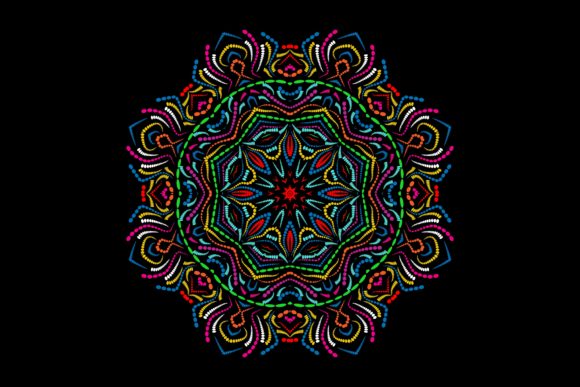
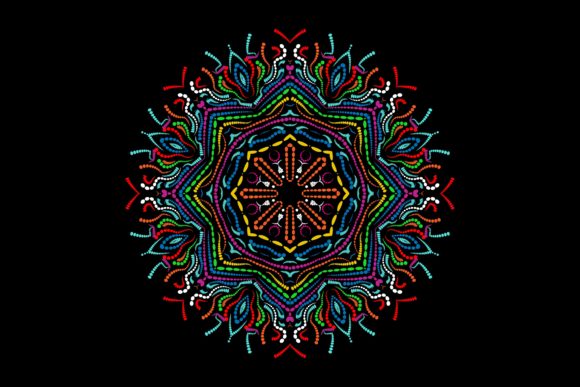
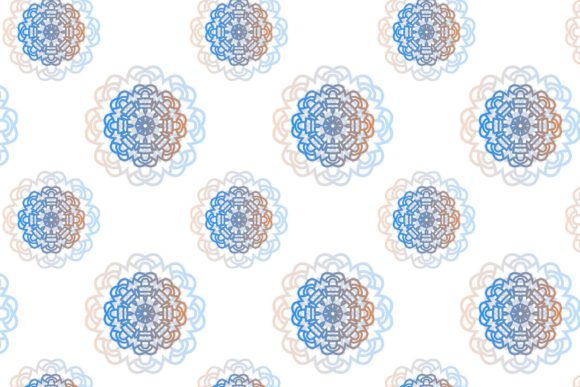
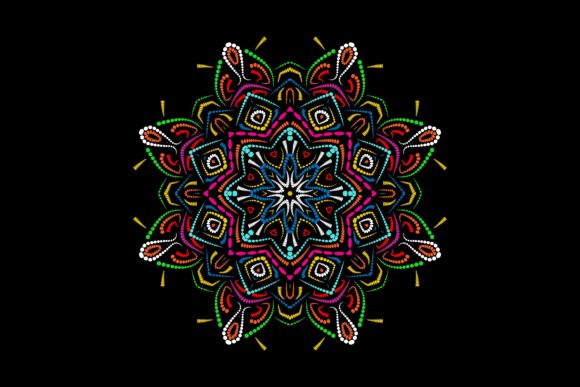
The Mandala Pattern Pink Star Layered Flower is a digitally crafted vector design that merges traditional mandala symmetry with contemporary floral and star motifs—rendered in soft, cohesive pink tones. Unlike generic floral or geometric patterns, this design features deliberate layering: concentric rings of stylized petals, interwoven star points, and fine linework that creates visual depth without overcrowding. Its intentional balance of organic flow and precise geometry makes it distinct among decorative vectors—especially those intended for both digital and physical output.
What Sets This Design Apart from Other Mandala or Floral Vectors
Many mandala vectors prioritize either intricate detail or scalability—but not both. Others lean heavily into sacred geometry or botanical realism, limiting adaptability across contexts. The Mandala Pattern Pink Star Layered Flower avoids these constraints by integrating three key attributes:
- Layered structure: Each element—petals, stars, and inner mandala rings—is on a separate vector layer (in the AI file), enabling selective editing, color adjustments, or isolation for specific applications.
- Neutral-yet-warm palette: The pink tone is intentionally desaturated and versatile—not candy-bright nor overly muted—so it harmonizes with ivory, sage, charcoal, blush, or even navy backdrops without clashing.
- Optimized resolution independence: As a true vector (not traced raster), it scales cleanly from a 2-inch embroidery motif to a 60-inch wall decal, with no loss of edge fidelity or line consistency.
This contrasts with JPEG-only floral packs, which often suffer from pixelation when enlarged, or monochrome mandalas that require manual recoloring for coordinated projects. It also differs from hand-drawn henna-inspired patterns, which may lack the precision needed for laser cutting or CNC engraving.
Practical Use Cases—and Where It Fits Best
The Mandala Pattern Pink Star Layered Flower excels where flexibility, repeatability, and aesthetic cohesion matter. Its dual-format delivery—AI for editing and JPEG for immediate use—supports diverse workflows:
- Wedding supplies: Used as a repeat pattern on invitations, napkin prints, or acrylic cake toppers. Because the AI layers are labeled and grouped, designers can easily remove the outer star ring for a softer look—or extract just the central flower for monogram accents.
- Henna painting references: Artists print the JPEG at varying sizes to trace onto skin or practice sheets. The clear linework and balanced negative space support steady hand application—even for intermediate practitioners.
- Textile design: When tiled or mirrored, the pattern works well on tablecloths, scarves, or knit chart backgrounds. Unlike seamless tile vectors that repeat rigidly, this design allows subtle rotation or scaling between repeats to avoid mechanical repetition.
- Laser cutting & vinyl crafting: The clean vector paths (with no overlapping anchors or stray points) cut reliably on machines like Cricut Maker or Glowforge. Test cuts show minimal need for path simplification—a common bottleneck with ornate mandalas.
It’s less ideal for high-contrast screen printing on dark fabrics unless inverted or adjusted—its delicate linework may fill in at small sizes. Similarly, while suitable for sublimation on light polyester, users should verify bleed settings, as the outermost star points extend close to the artboard edge in default versions.
Comparing Formats: Why AI + JPEG Matters
The inclusion of both AI and JPEG files isn’t just convenience—it reflects functional intent. The AI file preserves full editability: individual strokes, gradient stops, and layer hierarchy remain intact. That means you can:
- Change stroke weight uniformly across all petals without redrawing.
- Swap pink for gold foil simulation using spot color swatches.
- Isolate the star layer and convert it to a cut-only outline, leaving the floral elements as print-only.
In contrast, JPEG alone limits you to resizing, cropping, or basic color overlays in raster editors—fine for mood boards or quick mockups, but insufficient for production-ready outputs. Some alternative mandala packs offer only SVG or EPS, which lack native layer support in Adobe Illustrator or Affinity Designer—making targeted edits slower and more error-prone.
When Another Option Might Be Better
While the Mandala Pattern Pink Star Layered Flower serves many needs well, it’s not universally optimal. Consider alternatives if:
- You require multi-color gradients within single shapes. This design uses flat fills per layer; complex mesh gradients would need manual rebuilding.
- Your project demands photorealistic texture, such as watercolor bleed or linen weave overlay. This is a clean-line vector—best paired with texture layers added separately.
- You’re designing for accessibility-first contexts (e.g., tactile graphics for visually impaired users). Its fine linework and layered density may reduce legibility in embossed formats unless simplified.
- You need modular components—like standalone petals, stars, or leaves for custom arrangements. While elements are layered, they’re compositionally locked. A kit of isolated SVG icons would suit that workflow better.
Also, note that this is a single-composition vector—not a pattern library. If your work involves frequent variation (e.g., rotating seasonal themes), you’ll likely supplement it with complementary designs rather than rely on it exclusively.
Real-World Application Insights
A textile designer recently used the Mandala Pattern Pink Star Layered Flower as the anchor motif for a limited-run tablecloth series. She duplicated the AI file, reduced opacity on the star layer, and applied a subtle noise filter to the floral ring—creating a “watercolor wash” effect while preserving sharp registration for screen printing. Another user, a wedding planner, printed the JPEG at 300 DPI on vellum, then backlit it behind acrylic signage—leveraging its balanced positive/negative space for soft shadow play.
These examples highlight how the design supports adaptation—not just replication. Its strength lies in being a foundation, not a finished product. That makes it especially valuable for professionals who balance brand consistency with contextual nuance—whether adapting a motif for eco-friendly fabric dyeing or adjusting line thickness for hand-stamped stationery.
Key Decision Factors to Weigh
Before choosing the Mandala Pattern Pink Star Layered Flower, consider these practical questions:
- Do you need editable layers? If yes, verify the AI file includes named layers—not just grouped objects.
- What’s your primary output method? Laser cutting benefits most from clean vectors; social media posts may only need the JPEG.
- How much time do you have for customization? The layered AI reduces setup time versus tracing or redrawing from scratch—but still requires basic vector literacy.
- Does your color system allow for pink integration? While adaptable, it’s not a neutral grayscale base—so assess existing palettes first.
For crafters, event designers, and small-batch makers who value clarity, scalability, and thoughtful structure over trend-driven novelty, the Mandala Pattern Pink Star Layered Flower offers reliable utility across mediums. It doesn’t replace creative judgment—but it does remove technical friction from executing it.