Plaid Lines Pattern Bundle Vol.19: A Practical Evaluation for Designers and Creators
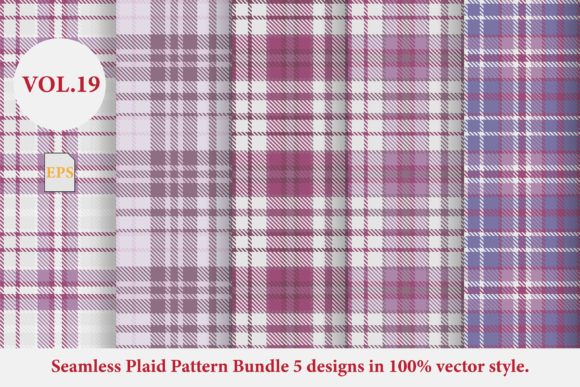
Plaid Lines Pattern Bundle Vol.19 is a curated collection of 100 vector-based plaid line patterns, delivered in EPS 10 format with seamless tiling capability. Each design is built at high resolution (300 dpi), optimized for scalability without quality loss, and structured to repeat smoothly across surfaces—whether applied to fabric mockups, packaging, web backgrounds, or print layouts. Unlike raster-based alternatives, these are true vector assets: fully editable in Adobe Illustrator or compatible software, allowing users to adjust colors, line weights, spacing, and scale non-destructively.
How Plaid Lines Pattern Bundle Vol.19 Fits Into the Broader Pattern Landscape
Pattern libraries fall broadly into three categories: raster image packs (JPEG, PNG), vector pattern sets (EPS, AI, SVG), and procedural or parametric tools (plugins, scripts, or generative apps). Plaid Lines Pattern Bundle Vol.19 belongs firmly to the second group—but with specific emphasis on line-based plaid structures, not filled or shaded variations. This distinction matters in practice: line plaid patterns offer greater flexibility for overlay work, screen printing separations, embroidery digitizing prep, and minimalist branding applications where clarity and negative space are intentional.
Compared to general-purpose plaid bundles that include solid-color plaids, tonal gradients, or textured overlays, Vol.19 prioritizes clean geometry and rhythmic repetition. Its 100 designs explore subtle shifts in stripe density, intersection angles, baseline offsets, and contrast ratios—not dramatic stylistic departures. That makes it especially useful when consistency across a project matters more than visual variety alone.
Seamless Functionality and Technical Considerations
The term “seamless” here refers to technical tiling behavior—not just visual continuity. Each pattern in Plaid Lines Pattern Bundle Vol.19 has been constructed with precise tile boundaries and aligned anchor points, ensuring no visible seams appear even when scaled across large-format outputs like wall graphics or textile repeats. This differs from some older or auto-generated pattern files where alignment drifts or clipping occurs at tile edges.
EPS 10 compatibility means broad backward support—usable in Illustrator CS6 through current versions—and avoids newer format dependencies (like cloud-only AI files or SVG limitations in certain RIPs). There are no JPEG files included, which reflects an intentional choice: JPEG introduces compression artifacts, fixed dimensions, and no editability. For professional workflows where color accuracy, output control, and future adaptability matter, that omission is a feature—not a limitation.
Comparing Use Cases: When Vol.19 Delivers Clear Value
Vol.19 excels in scenarios requiring precision, repeatability, and minimal intervention:
- Textile and surface design: Seamless tiling supports fabric repeat calculations for digital printing or weaving specs; vector paths allow direct import into CAD systems used in apparel development.
- Branding and identity systems: Line-based plaids integrate cleanly with typographic elements, icon sets, and monochrome palettes—especially where brand guidelines restrict color count or require scalable assets.
- Architectural visualization and interior mockups: Clean line patterns render predictably in 3D software (when imported as vector textures or converted to high-res tiles), avoiding moiré or aliasing common with low-DPI JPEGs.
- Educational and workshop materials: Instructors can deconstruct individual patterns to teach grid systems, modular design, or rhythm in composition—since every element remains editable and labeled by construction logic.
In contrast, if your workflow relies heavily on photorealistic texture blending, layered opacity effects, or rapid drag-and-drop use in Canva or Figma, Vol.19’s vector-native structure may require extra steps—such as exporting to SVG or converting to embedded bitmap tiles. It’s not designed for “instant background” simplicity in no-code tools, but rather for environments where control and fidelity are primary goals.
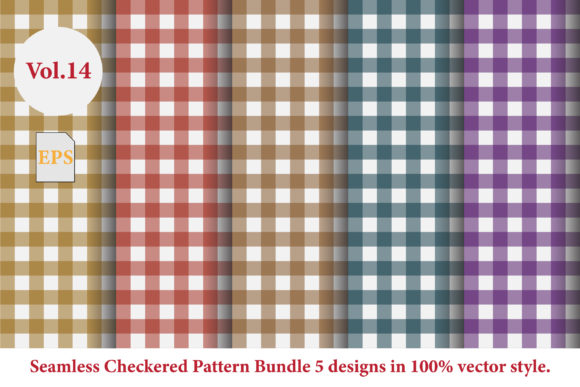
Understanding the Seamless Plaid Lines Pattern Bundle 5 Designs Variant
Alongside Vol.19, the Seamless Plaid Lines Pattern Bundle (5 Designs) offers a smaller, focused subset—five carefully selected patterns, also vector-based and seamless, delivered in the same EPS 10 format. While Vol.19 provides breadth for long-term projects or studios building pattern libraries, the 5-design bundle suits evaluative use: testing how line-based plaids behave in a specific context before committing to a larger set, or fulfilling a narrow brief where only a few coordinated options are needed.
The tradeoff isn’t just quantity—it’s curation intent. The 5-design version often includes patterns with wider spacing or higher contrast, making them more legible at small scales (e.g., app icons, social media avatars, or label graphics). Vol.19, by contrast, includes tighter weaves and subtler variations better suited to full-bleed applications or macro-scale repetition.
Realistic Limitations and Decision Factors
No pattern bundle solves every problem. Plaid Lines Pattern Bundle Vol.19 does not include:
- Pre-built color palettes or swatch libraries—colors must be assigned manually per project.
- Multi-layered or animated variants (e.g., parallax plaids or time-based morphs).
- Direct integration with CMS platforms, e-commerce themes, or design system tokens.
- License extensions for reselling or bundling within commercial templates (check individual license terms for permitted uses).
These aren’t oversights—they reflect the bundle’s focus on foundational, editable assets over turnkey solutions. If your priority is plug-and-play implementation with zero customization, a subscription-based pattern service or theme-integrated resource may align better. But if you value ownership, longevity, and the ability to evolve patterns alongside evolving brand needs, Vol.19’s vector-first approach supports that trajectory.
Who Benefits Most—and Who Might Look Elsewhere
Designers working across print, product, and digital media—especially those maintaining internal asset libraries or supporting clients with strict production requirements—often find Vol.19 integrates well into established pipelines. Its lack of JPEGs and reliance on EPS 10 means fewer compatibility surprises during handoff to prepress teams or manufacturers.
Conversely, hobbyists experimenting casually with pattern design, educators needing quick classroom visuals, or developers building responsive websites with CSS-based tiling may find the learning curve steeper than necessary. In those cases, free SVG pattern generators or lightweight CSS grid tools offer faster iteration—even if they sacrifice fine-grained control or scalability.
It’s also worth noting that “plaid” itself carries cultural and contextual weight. Some applications benefit from historically informed stripe ratios (e.g., tartan standards), while others prioritize abstraction and rhythm over tradition. Vol.19 leans toward the latter: its patterns are inspired by plaid structure but not bound to heritage specifications. If authenticity to specific clan or regional weaves is essential, dedicated tartan archives or licensed heritage resources would be more appropriate.
Making a Grounded Choice
Choosing Plaid Lines Pattern Bundle Vol.19 isn’t about selecting the “most patterns” or the “highest resolution”—it’s about matching technical characteristics to real-world constraints. Ask yourself:
- Do I need patterns that scale infinitely without degradation?
- Will I adjust colors, stroke weights, or spacing regularly—or use them as-is?
- Is seamless tiling required across large physical surfaces, or mostly for screen-based previews?
- Do my collaborators or vendors expect native vector files, or do they rely on raster imports?
- How many distinct plaid rhythms do I realistically need for upcoming projects—5, 20, or 100?
There are many others to see in the shop—including additional volumes, alternate line-weight families, and complementary geometric bundles. But Vol.19 stands out for its balance of scope, technical rigor, and quiet versatility. It doesn’t shout. It supports. And for professionals who build rather than borrow, that reliability is rarely incidental.