Cute Cactus Pattern Art
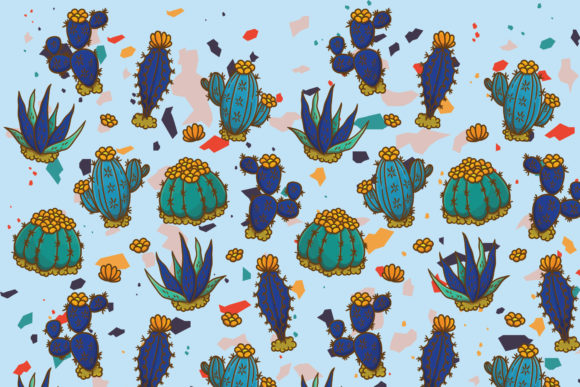
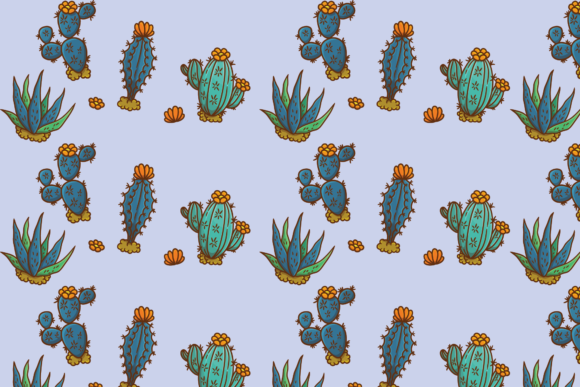
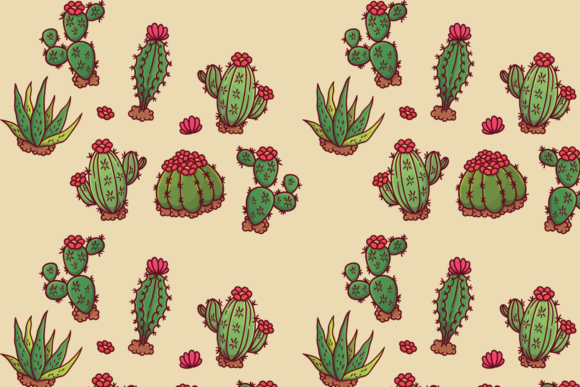
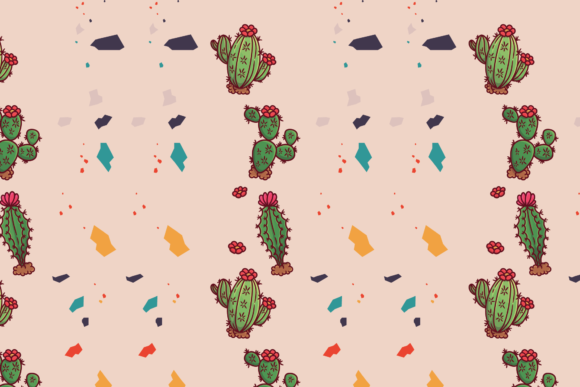
Cute Cactus Pattern Art refers to a digitally created, repeatable design featuring stylized cacti—often simplified, friendly, and playful in appearance—arranged in a seamless or semi-seamless layout. It is intended for versatile application across digital and physical media, including print-on-demand products, web graphics, craft projects, and branding elements. Unlike single-illustration assets, pattern art emphasizes rhythm, balance, and scalability, allowing the motif to tile smoothly across surfaces of varying dimensions.
People explore Cute Cactus Pattern Art for several practical reasons. Designers may seek it to accelerate production timelines when building themed merchandise—such as greeting cards, fabric prints, or stationery—without commissioning custom work. Educators or content creators might use it in presentations or learning materials where botanical themes support engagement without visual complexity. Hobbyists involved in vinyl cutting, embroidery digitizing, or laser engraving often look for patterns with clean outlines and consistent line weights, which simplify file preparation and machine compatibility.
The design described is available in six widely supported formats: AI (Adobe Illustrator), EPS (Encapsulated PostScript), SVG (Scalable Vector Graphics), DXF (Drawing Exchange Format), JPG, and PNG. Each version uses a consistent canvas size of 1920 px × 1280 px. This resolution provides sufficient detail for screen display and moderate-scale print output while remaining manageable for editing workflows. The vector formats (AI, EPS, SVG, DXF) preserve scalability and allow modification of individual elements—such as adjusting colors, spacing, or isolating specific cacti—without quality loss. Raster formats (JPG, PNG) are optimized for immediate use in web publishing or layered design software but do not support infinite resizing without pixelation.
A key benefit of this asset is format breadth. Users working across different platforms—Adobe Creative Suite, CorelDRAW, Silhouette Studio, Cricut Design Space, or open-source tools like Inkscape—can select the version best suited to their environment. The inclusion of DXF supports compatibility with CAD-based cutting machines, while SVG suits web developers integrating scalable icons or backgrounds. PNG files include transparency, making them suitable for overlaying on varied backgrounds without manual masking.
However, users should consider certain tradeoffs. While the stated canvas size is uniform across formats, raster files (JPG and PNG) are fixed-resolution outputs. Enlarging them significantly for large-format printing—such as banners or wall decals—may require upscaling techniques that risk softness or artifacts. Vector files avoid this limitation, but editing them still requires familiarity with vector-editing principles: understanding layers, grouping, path manipulation, and color mode settings (e.g., RGB vs. CMYK for print). Users unfamiliar with these concepts may find initial adjustments more time-consuming than expected.
Another consideration is pattern structure. “Cute” styling typically involves rounded shapes, minimal detail, and light shading—or none at all—to maintain clarity at small scales. This works well for applications like social media avatars, app icons, or textile repeats, but may lack the botanical accuracy or textural nuance needed for scientific illustration, high-end editorial design, or luxury packaging. If realism, species-specific accuracy, or intricate linework is essential, alternative resources—such as hand-drawn botanical illustrations or licensed photography—may better align with those goals.
This Cute Cactus Pattern Art is a strong fit when the priority is efficiency, adaptability, and thematic consistency. For example, an Etsy seller launching a line of succulent-themed mugs and tote bags benefits from a ready-to-tile pattern that maintains visual cohesion across product types. A teacher preparing classroom posters about desert ecosystems gains value from a friendly, non-intimidating visual that supports accessibility and age-appropriate tone. Similarly, a freelance designer building a brand identity for a wellness startup with a “grounded, natural” ethos can integrate the pattern into website backgrounds or email headers without licensing ambiguity—provided usage rights permit such application.
Conversely, alternatives may be preferable in specific cases. If precise control over tile alignment or color separation is required—for instance, in screen-printing production—users may need to verify whether the provided pattern includes bleed areas, registration marks, or Pantone references. This particular asset does not indicate such features. Likewise, designers needing responsive web behavior—like animated or interactive cactus elements—will need to extend the static SVG with CSS or JavaScript, as the file itself contains no interactivity. For multi-language contexts, consider whether the pattern’s visual language relies on culturally specific associations; while cacti commonly signal resilience or low-maintenance care in many Western contexts, interpretations may vary elsewhere.
Practical decision-making starts with clarifying the intended use case. Ask: Will the pattern appear primarily on screen or in print? At what scale? Does the project require editing flexibility, or is it a one-time placement? If vector editing is necessary—and the user has access to compatible software—the AI or SVG versions offer the most long-term utility. If the goal is quick integration into Canva, PowerPoint, or social media tools, PNG with transparency is often the most frictionless choice. For crafters using cutting machines, DXF or SVG tends to yield reliable results, though verifying unit settings (inches vs. millimeters) before importing remains essential.
Also assess technical readiness. Users comfortable converting between color modes, managing layers, or exporting subsets of a pattern will extract more value than those expecting plug-and-play functionality across all scenarios. Reviewing sample previews—where available—helps gauge line weight consistency, spacing between motifs, and overall density before committing. Since the design is described as easy to edit “as needed,” confirm whether embedded fonts or effects (e.g., gradients, blends) are present; these can sometimes limit cross-software compatibility unless expanded or flattened appropriately.
Finally, consider sustainability of use. A pattern that works today for a small batch of stickers may need adaptation later for packaging labels or apparel tags. Choosing a vector-based source file supports that evolution. However, if the project timeline is tight and only raster output is required, selecting JPG or PNG avoids unnecessary software overhead—so long as resolution requirements remain within the 1920 × 1280 px boundary.
In summary, Cute Cactus Pattern Art serves as a functional, adaptable resource for users seeking a lighthearted botanical motif with broad technical compatibility. Its strength lies in accessibility across tools and applications—not in uniqueness or bespoke craftsmanship. Evaluating it against actual workflow needs, rather than general appeal, leads to more confident implementation decisions.