Diagonal of Square Tile Pattern 34
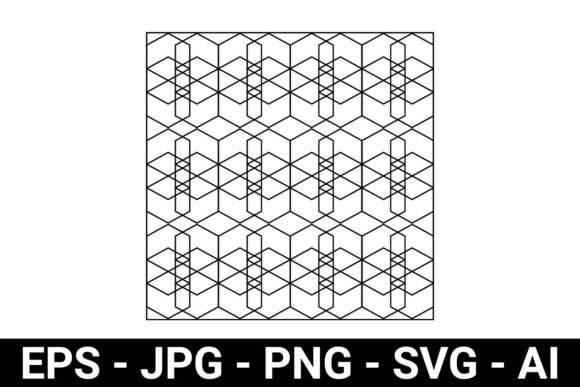
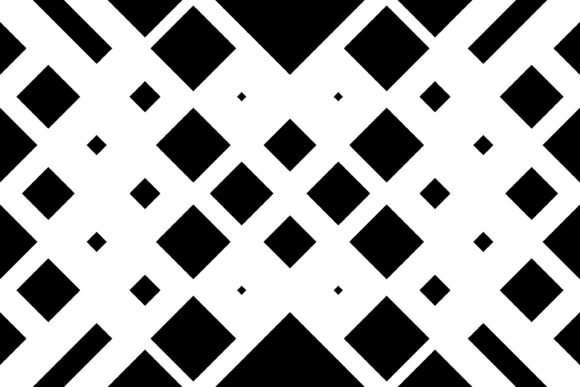
Diagonal of Square Tile Pattern 34 is a precise, repeatable vector motif built from intersecting black mosaic lines on a crisp white ground—arranged in a tight square grid where each tile’s internal diagonal forms a continuous, rhythmic stripe. It’s not just geometry; it’s rhythm made visible. Unlike generic chevrons or herringbones, this pattern balances mathematical clarity with subtle visual tension: the diagonals align across tiles without breaking continuity, yet avoid monotony through disciplined spacing and stroke weight. Its monochrome foundation—pure black lines against pure white—makes it endlessly adaptable, scalable, and legible at any size, from embroidery thread count to billboard resolution.
Why This Pattern Fits Modern Creative Workflows
Today’s creators—from indie textile designers to UI developers—need assets that move fluidly across tools and outputs. Diagonal of Square Tile Pattern 34 answers that need. As vector-based, it resizes infinitely without pixelation. As a seamless tile, it repeats flawlessly in Adobe Illustrator, Figma, Procreate, or CSS background declarations. No manual alignment. No raster artifacts. Just clean, predictable behavior. That reliability matters when time is scarce and consistency is non-negotiable—whether you’re mocking up a capsule collection mood board or generating dynamic wallpaper for a Shopify store.
More than technical convenience, its monochrome simplicity aligns with how professionals now approach visual hierarchy. In an age of notification overload and attention fragmentation, high-contrast, low-distraction patterns like this one serve functional roles: they add texture without competing with content, suggest movement without demanding focus, and reinforce brand tone—especially for brands leaning into minimalism, craftsmanship, or quiet confidence.
From Analog Craft to Digital Utility
The diagonal stripe has long carried meaning: in mid-century architecture, it signaled modernity; in Bauhaus textiles, it expressed structural honesty; in 1980s Memphis design, it injected play. But Diagonal of Square Tile Pattern 34 distills those references into something quieter and more versatile. It doesn’t shout “retro” or “futuristic”—it simply works. That neutrality is intentional. Designers aren’t looking for nostalgia traps anymore; they want building blocks that hold their own in diverse contexts—on a linen napkin, a podcast cover, a ceramic glaze preview, or a SaaS dashboard loading screen.
This evolution reflects broader shifts in creative practice. Where once a pattern might be hand-drawn, scanned, and color-corrected for print, today’s workflow expects immediate compatibility: SVG export, HEX-coded swatch options (even if only #000000 and #FFFFFF), and documentation that clarifies tile dimensions, bleed zones, and safe margins. Diagonal of Square Tile Pattern 34 meets that standard—not as an afterthought, but by design. Its 34 designation isn’t arbitrary; it signals version control, precision, and reproducibility—qualities that matter when collaborating across time zones or handing off assets to print vendors.
Practical Uses Across Industries
Real-world application reveals what makes this pattern resilient:
- Textile & Apparel: Used as a subtle lining motif in sustainable fashion labels, where the black-on-white contrast reads cleanly under natural light—and holds up through repeated washes when translated to screen-printed cotton or digital jacquard weave.
- Wallpaper & Interiors: Applied at large scale in co-working spaces or boutique hotels, it adds architectural interest without visual noise. Because the line weight remains consistent across scales, it avoids the “busy wall” effect common with overly dense motifs.
- Digital Backgrounds: Integrated into presentation decks or webinar backdrops, it provides gentle depth behind talking points—unlike gradients or stock photos, it won’t distract from spoken content or slide text.
- Packaging & Wrapping: Printed on kraft paper or matte-finish mailers, the pattern reinforces tactile authenticity. Its geometric rigor contrasts thoughtfully with hand-stamped logos or soy-based ink typography.
- UI Elements & Icons: Adapted as a subtle hover-state fill or disabled-button texture, it communicates interactivity through contrast rather than color—supporting WCAG-compliant interfaces without sacrificing style.
Designing With Restraint—Not Just Repetition
Using Diagonal of Square Tile Pattern 34 effectively means understanding restraint. Its power lies in how little it does—not how much. Overuse dilutes impact. Try pairing it with generous whitespace, asymmetric layouts, or single-point color accents (a rust button on a black-and-white tote, for example). Avoid stacking it with other geometric patterns unless there’s clear hierarchy—say, using it as a base layer beneath a larger-scale abstract watercolor overlay.
Also consider context-driven scaling. At 6 pt line weight on business cards, it reads as refined detail. At 48 pt on a trade show backdrop, it becomes bold rhythm. The same file serves both—if exported correctly. That flexibility saves time during client revisions and reduces asset sprawl in design systems.
Monochrome as a Strategic Choice
Calling this a “monochrome concept” isn’t just aesthetic shorthand—it’s a functional decision rooted in accessibility, sustainability, and production efficiency. Black ink on white substrate remains the most widely supported, lowest-cost, highest-yield printing configuration across digital, offset, screen, and even DTG methods. It also translates reliably to dark-mode interfaces when inverted (white lines on black), requiring no redesign—just a simple CSS filter or layer blend mode.
For educators or bloggers explaining pattern theory, Diagonal of Square Tile Pattern 34 offers a teachable moment: it demonstrates tessellation, symmetry axes, and modular repetition without needing color theory prerequisites. For entrepreneurs launching a new brand, it delivers instant cohesion—logo, website, packaging, and social banners can all share the same foundational rhythm, reinforcing recognition without repetition fatigue.
What’s Next—Without Chasing Trends
There’s no need to “update” Diagonal of Square Tile Pattern 34 to stay relevant. Its value grows as tools evolve—not because it changes, but because its stability becomes more valuable. As generative AI accelerates mockup creation, patterns like this serve as reliable anchors: they’re prompt-resistant (no hallucinated distortions), copyright-clear (original vector construction), and human-intended (designed for perception, not algorithmic novelty).
Looking ahead, expect to see it embedded more deliberately—not as decoration, but as infrastructure. Think: animated CSS backgrounds where diagonal movement syncs with scroll velocity; parametric textile files that adjust line density based on fabric stretch; or AR filters that project the pattern onto real-world surfaces with accurate perspective correction. None of those require reinventing the motif—just extending its utility with intention.
A Final Note on Craft and Clarity
At its core, Diagonal of Square Tile Pattern 34 reflects a quiet shift in how we define “modern.” It’s not about complexity or novelty—it’s about clarity, compatibility, and care in execution. Whether you’re a freelance illustrator sourcing textures for a client pitch, a product manager selecting a background for an onboarding flow, or a teacher preparing a lesson on symmetry, this pattern works because it respects your time, your tools, and your audience’s attention. It doesn’t ask to be noticed. It simply enables noticing—of content, of craft, of connection—without getting in the way.