Diagonal of Rhombus Mosaic 24
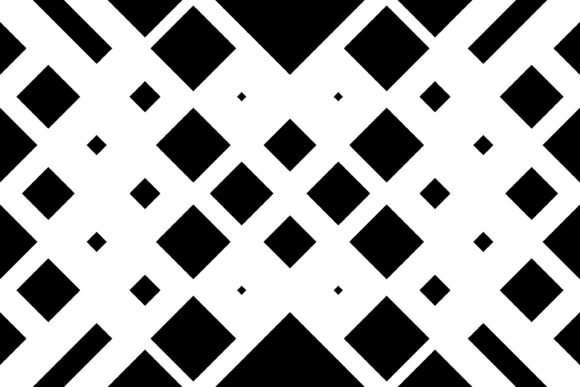
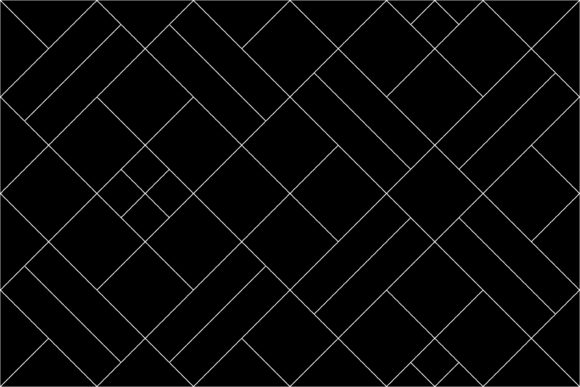
Diagonal of Rhombus Mosaic 24 refers to a precise, repeatable vector pattern built from intersecting rhombus shapes arranged along diagonal axes. Each rhombus is formed by two congruent isosceles triangles sharing a central diagonal—hence the name. The “24” denotes a consistent angular offset: the primary diagonal lines are rotated 24 degrees from horizontal, producing a tight, rhythmic stripe effect that remains geometrically balanced and visually dynamic. Unlike generic diagonal stripes, this pattern enforces strict rhombus proportions, ensuring symmetry across tile boundaries and seamless scalability for large-format applications.
This design is delivered as a monochrome vector file—black lines on a white background—with crisp, scalable paths suitable for high-resolution output. Its modern, hipster-aligned aesthetic stems from deliberate minimalism: no gradients, no textures, no color variation—only clean line work and negative space. It functions equally well as an illustration element, textile motif, wallpaper repeat, or surface texture, making it a versatile asset for designers working across print, digital, and physical media.
Why Designers Consider Diagonal of Rhombus Mosaic 24
Designers often seek patterns that balance structure with visual interest—especially when aiming for contemporary, understated sophistication. Diagonal of Rhombus Mosaic 24 appeals in contexts where clarity, repetition, and subtle rhythm matter. Its 24-degree angle avoids the predictability of 30- or 45-degree diagonals, offering distinction without sacrificing harmony. Because it’s built from rhombi—not arbitrary parallelograms—the pattern maintains proportional integrity at any scale, reducing distortion risk in large prints like murals or fabric bolts.
Its monochrome execution supports broad compatibility: it adapts easily to spot-color printing, embroidery digitizing, laser-cut stencils, or grayscale rendering on textured substrates. For branding or editorial projects emphasizing neutrality and precision, the pattern provides visual cohesion without competing with content. It also serves functional roles—such as guiding the eye in wayfinding systems or adding tactility to tactile graphics—without introducing chromatic complexity.
Benefits and Practical Advantages
- Scalability: As a vector-based diagonal stripe pattern, it retains sharpness at any size—from business card borders to 3-meter-wide wall coverings.
- Seamless tiling: The rhombus geometry ensures edge alignment across repeats, eliminating visible seams in wallpaper, textile, or web backgrounds.
- Production efficiency: Monochrome construction simplifies screen printing, vinyl cutting, and embroidery workflows—fewer layers, lower setup costs.
- Adaptability: Works as a full-coverage background, a subtle overlay texture, a framing border, or a standalone ornament within larger compositions.
- Contextual neutrality: Lacks cultural or temporal associations common in floral, Art Deco, or retro motifs—making it appropriate for long-term brand assets or institutional use.
Tradeoffs and Considerations
While Diagonal of Rhombus Mosaic 24 excels in precision and versatility, its strengths come with constraints. Its strict geometry limits expressive variation: users cannot adjust line weight mid-pattern without breaking the rhombus logic, nor can they introduce curves or organic breaks without reworking the core vector structure. That rigidity supports consistency but may feel restrictive for projects requiring hand-drawn warmth or irregular rhythm.
The 24-degree orientation, while distinctive, may not suit all spatial contexts. In narrow vertical formats—such as tall website sidebars or slim packaging panels—the diagonal flow can create unintended visual compression or directional tension. Similarly, on highly reflective surfaces (e.g., metallic foil or glossy textiles), the high-contrast black-on-white may emphasize minor registration inconsistencies during printing.
Also note: because it is strictly monochrome, it does not support color-based hierarchy or accessibility contrast adjustments beyond light/dark inversion. Designers needing WCAG-compliant contrast variants must generate those separately—vector editing software is required to modify fill or stroke values without degrading fidelity.
When Diagonal of Rhombus Mosaic 24 Is a Strong Fit
This pattern performs best in scenarios prioritizing modularity, longevity, and cross-medium adaptability. It is especially effective for:
- Architectural surfaces requiring durable, repeatable texture—such as acoustic panel cladding or elevator lobby walls.
- Branded merchandise where simplicity and recognizability matter—e.g., tote bags, notebook covers, or tech accessory wraps.
- Digital interfaces needing subtle, non-distracting backgrounds—like dashboard overlays or presentation slide textures.
- Editorial design systems seeking neutral yet structured visual anchors—such as section dividers in annual reports or book chapter headers.
- Product packaging aiming for minimalist shelf impact, particularly in apothecary, stationery, or sustainable goods categories.
When Alternatives May Be More Appropriate
Consider other solutions if your project requires:
- Color integration: If brand colors must drive the pattern, a custom-colored variant—or a different base pattern designed for multi-hue application—may serve better than adapting this monochrome version.
- Organic or irregular rhythm: Projects emphasizing craft, imperfection, or natural variation (e.g., artisan ceramics, botanical branding) benefit more from hand-illustrated or algorithmically randomized patterns.
- Small-scale legibility: At under 6 pt line weight or in micro-printing (e.g., security features), the rhombus intersections may blur; a simpler parallel stripe or dot matrix could offer greater fidelity.
- Thematic specificity: When narrative or cultural resonance matters—such as heritage motifs in fashion textiles or regional symbolism in public art—a contextually grounded pattern will communicate more effectively.
Making an Informed Decision
Evaluating Diagonal of Rhombus Mosaic 24 begins with clarifying your primary use case. Ask: Is scalability across formats essential? Does monochrome alignment support your production pipeline and brand guidelines? Will the 24-degree diagonal enhance—or interfere with—the intended viewing experience? Test the vector file at actual output sizes before finalizing: render it at 100% scale on your target medium (e.g., printed fabric swatch, projected backdrop, screen mockup) to assess rhythm, density, and contrast.
Also verify technical compatibility. Confirm that your design software supports the vector format (typically EPS or SVG), and that your printer or manufacturer accepts monochrome vector files with outlined strokes. If you anticipate future modifications—such as adjusting spacing or integrating with typography—ensure you have access to editable source files, not flattened raster exports.
Finally, compare against alternatives not just on aesthetics, but on lifecycle fit: how long will the design remain in use? How many output variations will it need? Diagonal of Rhombus Mosaic 24 offers durability through restraint—its value lies less in novelty and more in reliable, repeatable performance across evolving applications.