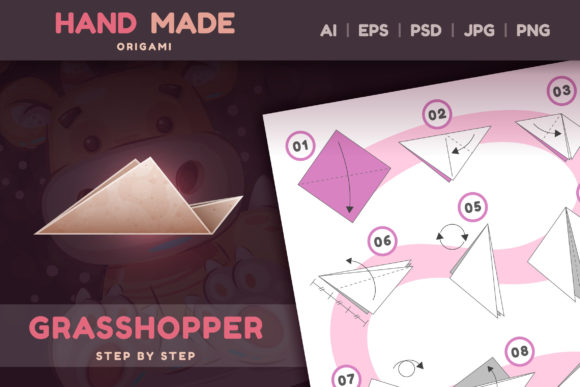
How to Make Origami Grasshopper
The art of origami has long been a source of fascination for those who enjoy the blend of creativity, precision, and patience. Among the many intricate designs that can be folded from a single sheet of paper, the grasshopper stands out as a particularly elegant and dynamic creation. Whether you're an artist looking to add unique elements to your work or a hobbyist eager to explore new techniques, learning how to make an origami grasshopper can be a rewarding addition to your skillset. This guide provides a practical approach to mastering this design, with insights on how it fits into broader creative and professional workflows.
Origami is more than just a pastime—it's a process that requires planning, execution, and attention to detail. The grasshopper, in particular, demands a structured approach due to its complex folding sequence. For professionals in fields such as graphic design, illustration, or product development, having access to high-quality vector files can streamline the integration of origami elements into digital projects. These assets, available in EPS and AI formats, allow for easy customization, resizing, and adaptation across different platforms and mediums.
Understanding the Role of How to Make Origami Grasshopper in Creative Workflows
For creators, the process of making an origami grasshopper can serve multiple purposes. It may be used as a preliminary step in conceptualizing a design, a tool for visual storytelling, or even as a component in physical or digital art installations. When integrated into a larger project, the grasshopper can add a sense of movement, texture, and organic form that complements other elements.
Before diving into the actual folding, it's important to consider how the grasshopper will be used. If you're working on a digital illustration, for example, having access to high-resolution raster files (such as JPEG, PNG, or PSD) ensures that the final output maintains clarity at any scale. These files are especially useful when creating large-format prints or when the grasshopper needs to be layered with other design elements.
During the creative process, the grasshopper can act as a reference point. Its structure can inspire new ideas, influence composition, or serve as a starting point for variations and adaptations. For educators and trainers, demonstrating how to make an origami grasshopper can be an engaging way to teach geometry, spatial reasoning, and problem-solving skills. The hands-on nature of the activity makes it a valuable tool for both students and professionals looking to enhance their understanding of form and function.
Practical Integration and Workflow Examples
One of the key benefits of learning how to make an origami grasshopper is its versatility. It can be incorporated into various stages of a project, depending on the specific needs of the workflow. For instance, if you're designing a packaging concept, the grasshopper could be used as a motif that adds a natural, handcrafted feel. In this case, the vector files would allow for seamless scaling and color adjustments to match the overall design theme.
For marketers and content creators, the grasshopper can be a unique visual element that enhances storytelling. Whether it's used in social media posts, blog illustrations, or email campaigns, the ability to customize the design ensures that it aligns with brand aesthetics. The availability of multiple file formats—EPS, AI, PSD, JPEG, and PNG—makes it easier to adapt the grasshopper to different platforms and applications without compromising quality.
In a business context, the grasshopper can also serve as a symbol of growth, agility, and resilience. Entrepreneurs and small business owners may use it as part of their branding strategy, integrating it into logos, merchandise, or promotional materials. By leveraging the high-resolution files provided, they can ensure that the design remains sharp and professional, regardless of the medium or size.
Preparation, Compatibility, and Usability
To get the most out of how to make an origami grasshopper, proper preparation is essential. Start by selecting the right type of paper. While traditional origami paper works well, you can also experiment with different textures, colors, and weights to achieve unique results. For digital use, ensuring that the files are compatible with your preferred software is crucial. Most modern design tools support EPS and AI formats, but it's always a good idea to check system requirements before downloading.
When working with the provided files, usability becomes a key factor. The PSD file, for example, allows for advanced editing, such as layering the grasshopper over other images or adjusting lighting effects. The JPEG and PNG files, on the other hand, are ideal for quick use in presentations, websites, or print materials. Understanding the strengths of each format helps in making informed decisions about how to best utilize the grasshopper in your workflow.
Organization is another important aspect. Keeping your files neatly categorized and labeled ensures that you can locate them easily when needed. For teams or collaborative projects, sharing the files through cloud storage or project management tools can improve efficiency and reduce the risk of errors.
Long-Term Use and Quality Control
Once you've mastered how to make an origami grasshopper, the next step is to consider its long-term use. Whether you're using it for personal projects or professional assignments, maintaining consistency in quality is essential. This includes ensuring that the digital files remain accessible and that the physical folds are accurate and durable.
Quality control becomes even more critical when the grasshopper is part of a larger production. For example, if it's being used in a commercial product, such as a greeting card or a decorative item, the design must meet specific standards. This involves testing the paper's durability, verifying the accuracy of the folds, and ensuring that the final product meets the intended purpose.
For those who plan to reuse the grasshopper in multiple projects, having a reliable set of files is invaluable. The availability of high-resolution and scalable formats means that you can adapt the design to different sizes and contexts without losing quality. This flexibility not only saves time but also reduces the need for rework or additional resources.
Ultimately, learning how to make an origami grasshopper is more than just a creative exercise—it's a practical skill that can enhance your workflow, expand your creative possibilities, and add value to your projects. Whether you're a designer, educator, entrepreneur, or hobbyist, integrating this technique into your routine can lead to more innovative and visually compelling outcomes.